What Is Faith-Based Investing? A Christian's Guide to Values-Aligned Wealth Stewardship
Faith-based investing aligns your portfolio with biblical values. Learn how it differs from ESG and SRI, what returns to expect, and how to get started.
by
Desiree Latu
published
July 3, 2026
What Is Faith-Driven Investing?
Faith-driven investing is an approach that aligns your financial decisions with your Christian values and biblical principles. Instead of asking only what an investment returns, it asks a second question alongside it. What does this investment do in the world, and does it reflect what I believe?
Underneath that question is a conviction that runs through all of Scripture. How you steward money is never neutral. It is a reflection of what you value and who you trust.
For many Christians, this begins with avoiding companies whose work runs against their faith. That instinct is right, and it matters. But the more you sit with it, the more a deeper question surfaces.
How can my capital actively take part in the good that God is doing?
That question is what moves an investor from screening out harm to seeking out impact. It is the doorway into faith-driven impact investing, the approach this guide builds toward. It keeps the careful screening of values-based investing and adds something more deliberate, the pursuit of measurable change in real people's lives.
How Christian Investing Has Grown Up
Faith-driven investing has matured over several decades, and it helps to see the arc.
Negative screening came first. The earliest approach simply avoided businesses tied to alcohol, tobacco, gambling, and other activities seen as inconsistent with Christian values. Keep your money out of the wrong places.
Positive screening came next. Investors began to actively favor companies that treated people well, governed honestly, and cared for creation. Not just avoiding bad actors but rewarding good ones.
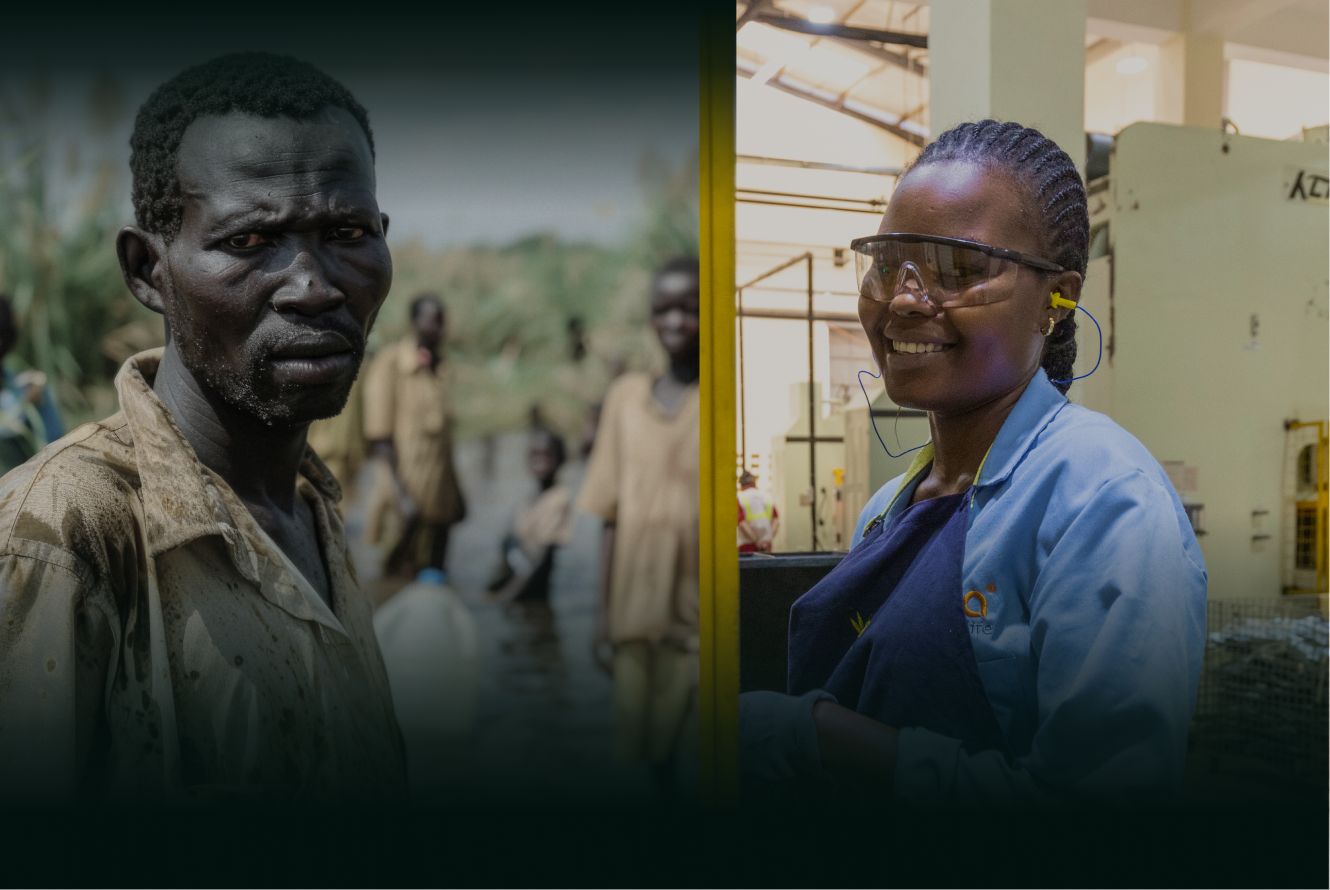
Faith-driven impact came third. Today, a growing group of Christian investors want their capital to do more than sidestep harm. They want it to create something. Jobs for people without them. Opportunity in places the market has overlooked. Dignity through work. This is where the conversation is heading, and it is where Talanton lives.
What Are the Biblical Foundations for Faith-Driven Investing?
Scripture gives us a rich way to understand our role as stewards of wealth. A few principles sit at the center.
The Parable of the Talents (Matthew 25:14-30)
Jesus' parable of the talents is perhaps the clearest biblical picture of faithful investing. A master entrusts his servants with resources, then leaves. When he returns, he commends the ones who put what they were given to work, and he rebukes the one who buried his share in the ground.
The point lands hard. God expects us to put what we have been given to work, not to bury it or hide it away. And notice the servant who failed was not lazy. He was afraid. Fear of loss felt like a reasonable excuse. It was not.
Well done, good and faithful servant. You have been faithful with a few things; I will put you in charge of many things. Come and share your master's happiness. (Matthew 25:21)
This is the verse Talanton was built around, and it shapes how we think about capital. Faithfulness is not caution. Faithfulness is wise, courageous deployment of what we have been entrusted with.
Stewardship, Not Ownership
Scripture keeps reminding us that everything belongs to God. The earth is the Lord's, and everything in it (Psalm 24:1). We are stewards, not owners, of what we hold.
That single shift changes the math of an investment decision. The goal is no longer simply to grow personal wealth. The goal is to manage God's resources in a way that honors Him and serves His purposes. That does not mean ignoring returns. The parable celebrates multiplication. It means weighing every investment through a Kingdom lens as well as a financial one.
Loving Your Neighbor Through Your Investments
The second great commandment, to love your neighbor as yourself, reaches all the way into a portfolio. When a person's capital funds businesses that exploit workers or hollow out communities, they are, in effect, choosing profit over people.
The reverse is also true. When we invest in companies that create dignified work, strengthen families, and bring hope to communities that lacked it, our money becomes love of neighbor at scale. That is not a metaphor. For the person who now has a steady job, it is the difference between fear and provision.
How Is Faith-Driven Investing Different from ESG or SRI?
Faith-driven investing is often confused with ESG investing or SRI. They share some family resemblance, but the differences matter.
Primary goal. ESG targets risk management. SRI aims to avoid harm. Faith-driven impact pursues Kingdom impact.
Foundation. ESG rests on stakeholder theory. SRI rests on social values. Faith-driven impact rests on biblical principles.
Screening approach. ESG relies on scores. SRI relies on negative screens. Faith-driven impact combines values screening with the pursuit of positive impact.
Success metric. ESG measures risk-adjusted returns. SRI measures harm avoided. Faith-driven impact measures a triple bottom line: financial, social, and spiritual.
Spiritual dimension. ESG and SRI have none. In faith-driven impact, it is central.
ESG: A Risk Framework
ESG investing scores companies on environmental practices, social policies, and governance. At its core, it is a risk management tool. The thesis is that well-governed companies carry fewer regulatory, reputational, and operational risks over time.
ESG factors can inform a faith-driven decision, but ESG is not Christian by nature. A fund can score beautifully on environmental metrics while running a business that cuts against biblical values.
SRI: Avoiding Harm
Socially Responsible Investing focuses on steering clear of companies that cause harm. SRI investors typically screen out tobacco, weapons, gambling, and similar industries.
Faith-driven investing includes this work. But stopping at avoidance leaves something on the table. Avoiding evil is good. It is not the same as pursuing good.
Faith-Driven Impact: From Screening to Transformation
The fullest form of faith-driven investing goes a step further and asks how an investment can actively take part in God's work of restoration.
Come back to the parable for a moment. The master did not praise the servant for avoiding a bad bet. He praised the servant who put capital to work and brought something back, returns that were financial and, by extension, eternal. The parable is not a lesson in risk avoidance. It is a call to faithful multiplication.
What Are the Different Types of Faith-Driven Investments?
Christians have several ways to bring their portfolios into line with their values.
1. Faith-Based Mutual Funds and ETFs
These publicly traded funds screen holdings against Christian values, with options from managers like Eventide, GuideStone, Timothy Plan, and Praxis. For most people, this is the most accessible front door.
What they offer: easy access through a standard brokerage account, professional management, broad diversification, and daily liquidity.
Their limits: they lean on negative screening, they create little direct transformation, and depending on the fund, some holdings may still raise concerns.
2. Direct Investments in Faith-Aligned Companies
Some investors build their own portfolios of individual companies that reflect their values. This route gives the most control and asks the most in research and ongoing attention.
3. Faith-Driven Impact Investing Through Funds
This approach sends capital toward investments designed to create measurable social and spiritual impact alongside a financial return. The fund structure is built to pursue returns while spreading risk across many underlying investments. Common forms include:
Private debt funds that lend to values-aligned businesses, often in markets where credit is scarce.
Private equity funds that take ownership stakes in companies built for both growth and impact.
Donor Advised Fund investments, where some DAF sponsors now let donors invest charitable assets for impact while awaiting distribution.
4. Faith-Driven Impact Investing in Sub-Saharan Africa
A growing number of faith-driven investors are finding opportunities in emerging markets, and Sub-Saharan Africa in particular, where capital can create outsized change.
Consider the difference. In most of the developed world, markets are efficient and capital is plentiful. A new dollar often just displaces an existing one. In markets with a real capital gap, a new dollar can be genuinely catalytic. It can fund a business that could not otherwise exist, create jobs that would not otherwise exist, and lift a community that has had little economic opportunity.
This is the conviction behind Talanton's portfolio. The Sub-Saharan Africa region holds some of the fastest growing economies in the world alongside real and persistent poverty. With the right partners and the right diligence, that combination is not a risk to avoid. It is a window to step through.
What Returns Can I Expect from Faith-Driven Investments?
One question comes up more than any other. Do you have to give up financial performance to invest according to your values?
It Depends on What You're Investing In
There isn't one answer, because faith-driven investing isn't one product. Returns depend on the structure, the strategy, the geography, and the risk you're taking on. The honest starting point is that values alignment and financial performance are two separate questions, and you can ask both at once.
The more useful move is to stop thinking of return as a single number.
Different Vehicles, Different Profiles
Publicly traded faith-based funds apply values screens to a portfolio of public companies. They are priced daily, and their performance moves with the markets they track.
Private impact investments vary widely by strategy, geography, and risk profile. Some are structured to target concessionary returns, accepting a lower financial return in exchange for greater impact. Others are structured to target market-rate returns. The right fit depends entirely on your own goals and risk tolerance.
Emerging market impact investments carry their own set of risks, including currency, liquidity, and country risk, alongside the opportunity that comes with a real capital gap. These are long-term, illiquid commitments, and they are not for every investor or every portfolio.
None of this is a forecast. Past performance never predicts future results, and any specific opportunity has its own terms, risks, and target outcomes that deserve a real conversation. The point here is simpler. Investing according to your values does not, by itself, require you to give up the chance at a financial return.
The Triple Bottom Line
Many faith-driven investors weigh returns across three dimensions, not one.
Financial returns. The monetary return on the investment.
Social impact. Measurable outcomes, like jobs created, families lifted, communities changed.
Spiritual returns. Lives touched by the Gospel, faith lived out inside portfolio companies, and the eternal weight of faithful stewardship.
Seen this way, judging a faith-driven investment on money alone misses the point. The real question is not only whether you maximized return. It is whether you stewarded God's resources in a way that honored Him and served His Kingdom.
How Do I Evaluate If an Investment Aligns with Christian Values?
Looking at an investment through a faith lens means asking a few honest questions, in three layers.
Screening Questions: What to Avoid
Does the investment involve any of the following?
Products or services that harm human dignity.
Exploitation of workers or communities.
Environmental destruction with no regard for creation.
Deceptive or predatory business practices.
Activities directly contrary to biblical teaching.
Positive Impact Questions: What to Seek
Does the investment do any of the following?
Create meaningful work and economic opportunities.
Strengthen families and communities.
Steward creation well.
Operate with integrity and ethics.
Make room for faith to flourish.
Due Diligence Questions
Who manages the investment, and what is their track record?
How are decisions made, and against what criteria?
How is impact measured and reported, and by whom?
What are the fees, and are they reasonable?
What are the liquidity terms and the exit options?
Back to the Parable
Then ask the question underneath all the others. Does this represent faithful multiplication of what God has entrusted to me? Or does it look more like burying a talent in the ground, whether through excessive caution or through a business that works against God's purposes?
How Do I Get Started with Faith-Driven Investing?
The first steps are simpler than they look.
Step 1: Clarify Your Values and Goals
Before any decision, spend time in prayer and reflection. What biblical principles should guide your investing? What kind of impact do you most want to create? What is your risk tolerance and time horizon? What returns and liquidity do you actually need?
Step 2: Assess Your Current Portfolio
Look honestly at what you already own. Does it align with your values? Are you unknowingly invested in companies that conflict with your faith? Where are the gaps between what you believe and what you hold?
Step 3: Start with Accessible Options
For most people, faith-based mutual funds or ETFs through a standard brokerage account are the easiest place to begin. They bring instant diversification and professional management while keeping your money in step with your values.
Step 4: Explore Impact Investing
As you grow more confident, look toward greater impact. Research faith-driven impact funds. Consider allocating a portion of your portfolio to private impact investments. If you use a donor advised fund, explore its impact investing options.
Step 5: Seek Guidance That Shares Your Values
Consider working with a financial advisor who understands faith-driven investing and shares your convictions. Kingdom Advisors certifies professionals committed to biblically grounded financial guidance, and advisors can introduce their clients to opportunities like Talanton.
Common Questions About Faith-Driven Investing
Does faith-driven investing mean lower financial returns?
Not by definition. Values alignment and financial return are separate questions. Some faith-driven investments are structured to target market-rate returns, while others intentionally accept a lower financial return for greater impact. Returns vary by vehicle, strategy, and risk, and no investment can predict its future results. The better question is what blend of financial, social, and spiritual return fits your goals, and that is worth talking through with an advisor who understands both sides.
How is this different from tithing or charitable giving?
Giving and investing are complementary, not interchangeable. Giving is about generosity and supporting ministry. Investing is about stewardship and multiplication. You can and should do both, giving generously while making sure your investments reflect your values.
Can I do faith-driven investing through my 401(k) or IRA?
Many retirement plans now include faith-based fund options. If yours does not, ask your plan administrator about adding them. With an IRA you have full control over selection. To invest in private funds, you may need to move some of those assets into a self-directed IRA.
What minimum investment do private impact funds require?
Minimums vary. Some private impact funds require $100,000 or more for a direct investment. Others allow $25,000 or less through a donor advised fund.
How do I find an advisor who understands faith-driven investing?
Kingdom Advisors (kingdomadvisors.com) certifies Christian financial professionals. Look for the Certified Kingdom Advisor designation, held by advisors who specialize in aligning clients' investments with biblical principles.
Take the Next Step
Faith-driven investing is not about getting everything perfect. It is about intention. It is about recognizing that how you invest is a spiritual decision, not only a financial one.
It is about hearing "well done, good and faithful servant" over the whole of your stewardship, your giving and your investing alike.
Wherever you are on that path, the most important step is the next one. Start where you are. Learn as you go. And trust that faithful stewardship honors the Master who entrusted these resources to you in the first place.
Ready to see how faith-driven impact investing can align your portfolio with your values while creating real change in Sub-Saharan Africa? Schedule a conversation with Talanton.
Private investments involve risk. For accredited investors only. Talanton Advisors, LLC is an SEC filed Exempt Reporting Adviser.



.png)